Philip Catherwood
The Portable DoorPhilip Catherwood, usually called Pip, is a Victorian lieutenant whose surviving papers first seem to belong to Paul Carpenter, then become evidence of Pip’s own past. The confusion turns a bundle of letters, bank books, deeds, and a death certificate into a hinge between two lives: Paul’s fear that the records foretell his death, and Pip’s account of having been trapped for generations with Arthur Tanner. Yet the papers never settle the central question of how Pip’s recorded history relates to the man who speaks to Paul in the doorless room.
Identity and Historical Trace
The name first appears on a letter addressed to Lieutenant Philip Catherwood at the Parsonage in Norton St Edgar, Worcestershire, with a postmark of 22 April 1877. Paul finds other letters in the same handwriting, addressed to Catherwood and dated from that April through 12 January 1879. By the last of them, the lieutenant is serving in South Africa. The letters are love letters, and Paul, embarrassed by what he reads, only glances through them before putting them away.
Their dates draw Paul toward the history of the Zulu War. He connects Catherwood’s service with the British defeat at Isandlhwana on 22 January 1879, and concludes that the lieutenant probably died there. This is Paul’s inference from the dates and his knowledge of the battle, not a death explicitly confirmed by the letters. The gap between a paper trail that appears to end in disaster and Pip’s later, living presence remains unresolved.
The Papers and Paul’s Misidentification
The letters unsettle Paul because, only hours earlier, he had believed that a different bundle of papers in the strongroom bore his own name. When the letters prove to be addressed to Catherwood, he considers several explanations: he may have taken the wrong bundle, misread the handwriting in the dim strongroom, or imagined that the name changed. Hung over and anxious, he tries to make the apparent supernatural alteration into an ordinary mistake. The possible resemblance between Philip Catherwood and Paul Carpenter’s names gives that explanation a foothold, but not certainty.
Paul’s concern extends beyond the letters. If the letters belong to Catherwood, perhaps the money and death certificate that seemed to identify Paul do too. The remembered date on the certificate, 22 January, initially frightens him because he had understood it as the date of his own beheading. He then reasons that it may instead refer to Catherwood and the battle in 1879. This revised interpretation briefly calms him, but it does not explain why he had first read the papers as his own.
That night, the letters remain addressed to Lieutenant Catherwood when Paul checks them again. In a dream, however, he is back in the Victorian room, and the letters are addressed to him and signed by Sophie Pettingell. Even there, the opening name is Pip. The shifting address folds Paul’s present attachment to Sophie into the documents of Catherwood’s past, but the scene is explicitly a dream and does not establish that Sophie wrote the historical letters.
The next day, Paul waits until Sophie has gone for coffee before returning the letters and checking the other documents. The bank books, title deeds, and death certificate all bear Catherwood’s name. The result confirms that the strongroom contains a coherent set of papers belonging to the lieutenant, rather than the personal records Paul had feared were his. It resolves the immediate question of whose name is on the documents, while leaving the earlier apparent transformation—and Paul’s experience of it—unexplained.
Pip’s Appearance and Account
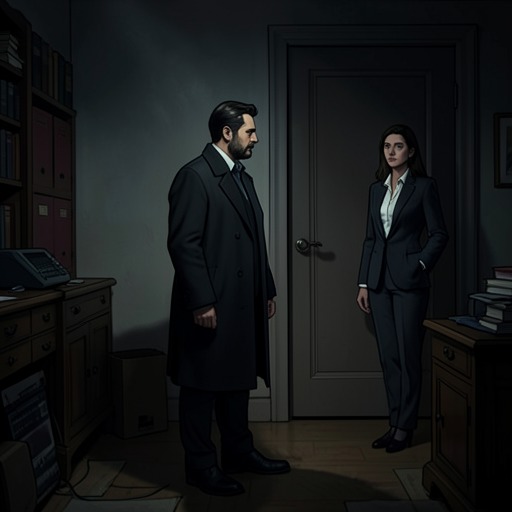
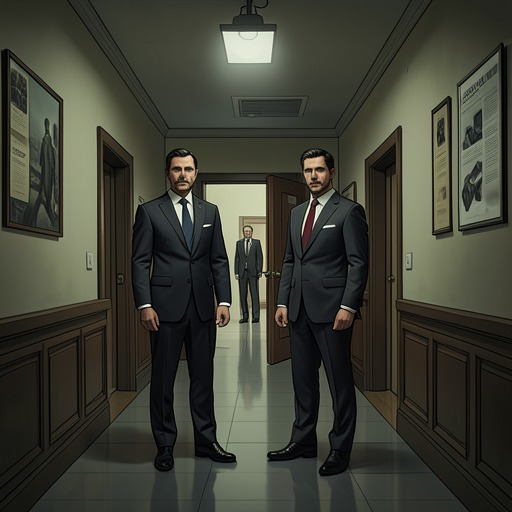
Pip enters the story in the doorless Victorian room where Paul has been before. He is one of two young men in Victorian clothes, the other being Arthur Tanner. Pip speaks reassuringly and points out a goblin lying motionless on the floor. When Paul introduces Sophie, Pip and Arthur respond politely; Sophie watches them with fascinated horror and holds herself still, apparently expecting an attack. Pip identifies himself as Philip Catherwood, says that most people call him Pip, and introduces Arthur as his friend and colleague.
Paul recognizes the name from the strongroom’s passbooks, share certificates, and deeds, but Pip complicates the neat conclusion that Catherwood belongs only to the past. He tells Paul that they have met before. That claimed familiarity places the documents and their living namesake in direct contact, even though Paul does not initially remember the meeting and the available account does not explain how Pip’s earlier encounter occurred.
Pip recounts that he and Arthur were summoned to Humphrey Wells’s office after Humphrey learned that the old man had given them a talisman. Humphrey offered money, promotion, and partnership in exchange for it; they refused. He then became angry and threatened them, but eventually dismissed them without using the coercive magic Pip believed he could have used. Pip and Arthur heard nothing further for several weeks.
The Doorless Room and Its Consequences
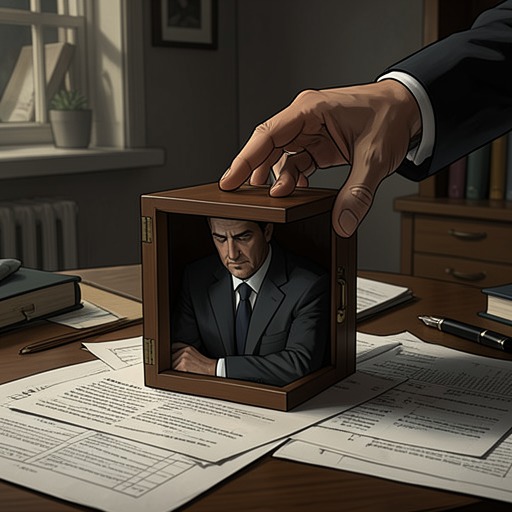
The next turn came when Casimir Suslowicz asked Pip and Arthur to spend a day or two sorting the strongroom’s securities. Near the end of the work, Humphrey’s secretary, Miss Julia, brought down a box of miscellaneous objects. Among them was a cardboard tube containing a rubber mat shaped like a door. After reading its instructions, Pip and Arthur tried the device against the strongroom wall. They commanded it to lead only to their lodgings, opened the doorway, and wedged it ajar with a heavy book before stepping through.
They arrived at their lodgings, but the ordinary door connecting their rooms to the rest of the building was absent. Humphrey then appeared in the magical doorway. According to Pip, he linked the punishment to their refusal to give up the talisman and to their knowledge of his business. Before they could act, he slammed the door; it vanished, leaving them in a room with no exit. Pip says that he and Arthur have remained there ever since.
Narrative Significance
Pip’s history links two kinds of enclosure. The strongroom preserves his letters and legal records among old securities, making a life seem legible through documents; the doorless room preserves Pip himself, but cuts him off from the ordinary world those records describe. Paul’s mistaken identification briefly makes Catherwood’s death date appear to be his own, while Pip’s appearance overturns the assumption that the name belongs only to a dead soldier.
The reversal does not supply a complete explanation. Paul verifies that the papers belong to Catherwood, and Pip gives a specific account of his imprisonment, but the story leaves the relationship between Catherwood’s apparent historical fate and Pip’s survival unsettled. That uncertainty gives the papers their force: they are not merely clues to a past life, but a record whose apparent ending cannot contain the person who tells it.